
A production line stops in the middle of a shift. The technician arrives an hour later, identifies the fault, and the replacement part takes another day to arrive. Two days of downtime, tens of thousands in losses. Most manufacturing companies know this scenario firsthand. What many do not realise is that in most cases, the failure could have been predicted – and prevented. Industrial IoT (IIoT) is not just another technology buzzword. It is a set of proven tools that solve exactly this problem in real-world production environments.
The Real Cost of Unplanned Downtime
Unplanned downtime costs the average mid-sized manufacturer anywhere from $50,000 to $500,000 per hour depending on the industry. The calculation goes beyond lost production – it includes idle labour, penalties for late deliveries, and emergency service callouts. Yet a large proportion of manufacturing companies still rely on reactive maintenance: they fix things when they break.
Industrial IoT offers a fundamentally different approach: instead of reacting to failure, companies predict and prevent it.
What Industrial IoT Actually Does
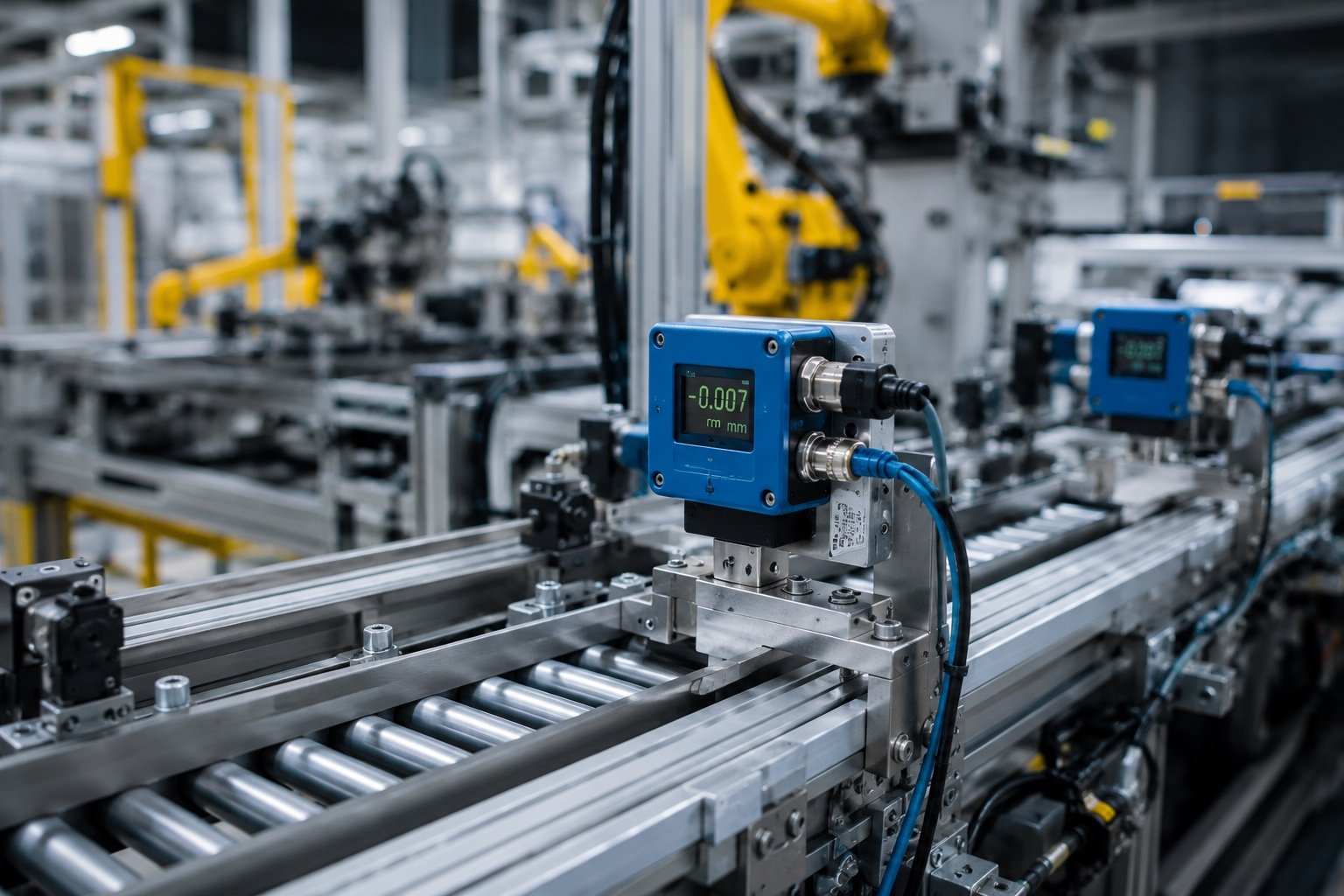
At its core, IIoT relies on smart sensors – compact devices that continuously measure critical parameters of machines and production lines: temperature, vibrations, pressure, humidity, energy consumption, and location. Data is transmitted wirelessly or via industrial protocols to a central system, where it is analysed in real time.
In practice, this means:
• A pump starts showing abnormal vibration patterns. The system alerts the maintenance team before the fault occurs.
• A furnace exceeds its optimal temperature range. The operator receives a notification on their mobile app.
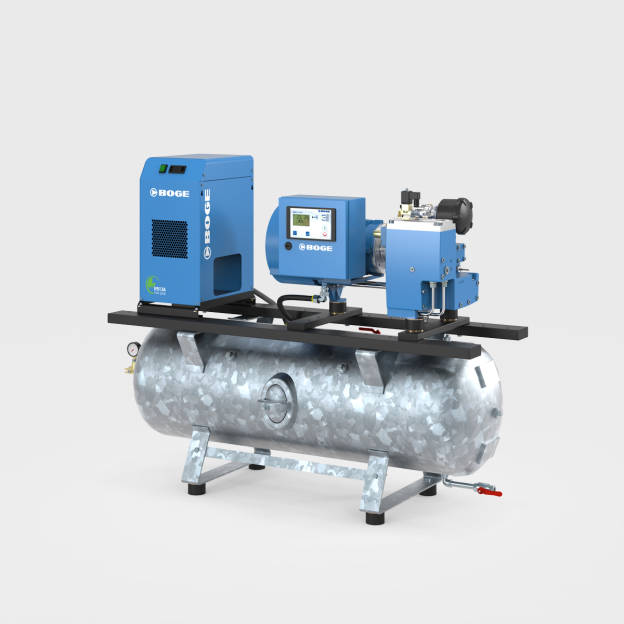
• A compressor starts consuming 15% more energy than usual. Analytics flag an approaching failure.
Predictive Maintenance: From Fighting Fires to Preventing Them
Predictive maintenance is arguably the most valuable benefit of industrial IoT. Unlike scheduled maintenance – which runs at fixed intervals regardless of the actual condition of the machine – predictive maintenance intervenes precisely when the data recommends it. Not sooner, not later.
The results are twofold: companies reduce costs from unnecessary preventive maintenance while simultaneously eliminating unplanned stoppages. Research across manufacturing sectors consistently shows that predictive maintenance cuts repair costs by 25–30% and unplanned downtime by 35–45%.
Remote Monitoring as a Competitive Advantage
Industrial IoT does not only change how companies maintain their machines – it changes how they manage their entire production process. Remote monitoring allows managers to track key production indicators from anywhere, in real time.
For companies with multiple sites, or those that deploy equipment at customer locations, this capability is a game changer. Instead of expensive on-site service visits, a secure remote connection gives technicians the same visibility they would have standing next to the machine.
OTA (Over-The-Air) firmware updates play a key role here as well. Adding a new feature to a device already deployed in the field – without a physical visit – is technically achievable today and saves significant time and money in practice.
Why Off-the-Shelf Solutions Often Fall Short
Industrial environments vary enormously. A food processing plant has different requirements than a machine shop or a temperature-controlled warehouse. Sensors must withstand extreme temperatures, dusty conditions, electromagnetic interference, or chemically aggressive substances. This is precisely why industrial IoT deployments often require electronics developed specifically for the application rather than generic, off-the-shelf components.
This is where specialists in custom hardware development become essential. Companies like ASN Plus – a Czech electronics development firm with over 13 years of experience across hardware, firmware, and application development – approach each project with both technical depth and business insight. The result is not just functional hardware, but a product optimised for manufacturability, long-term reliability, and total cost of ownership.
An Investment That Pays Back Fast
Industrial IoT is no longer the exclusive domain of large corporations. As the technology matures and the number of specialist development partners grows, mid-sized manufacturers are increasingly finding it accessible and affordable. The key is to start with a specific pain point – one production line, one critical machine – and deploy IIoT where downtime hurts most. In many cases, the return on investment is measured in months, not years.